How Much Protein Do Women Actually Need During Perimenopause and Menopause?
How much protein do women really need, especially during perimenopause and menopause? Learn how protein supports muscle, strength, and recovery after 40, how much you may need, and simple ways to get more from whole foods.
As a dietitian who tries to keep up-to-date on nutrition research and current diet trends, my internet searches have apparently led the algorithm to think that I am a protein maxxer who is also gluten-free and training for a Hyrox competition, none of which are actually true for me.
To put it mildly, there is A LOT of hype around protein, and for women in their 40s and beyond it can be difficult to filter through the cacophony of noise. “Who has time for this?” you may be asking. Well, your friendly, neighborhood Fuel to Thrive dietitian of course!
The Basics
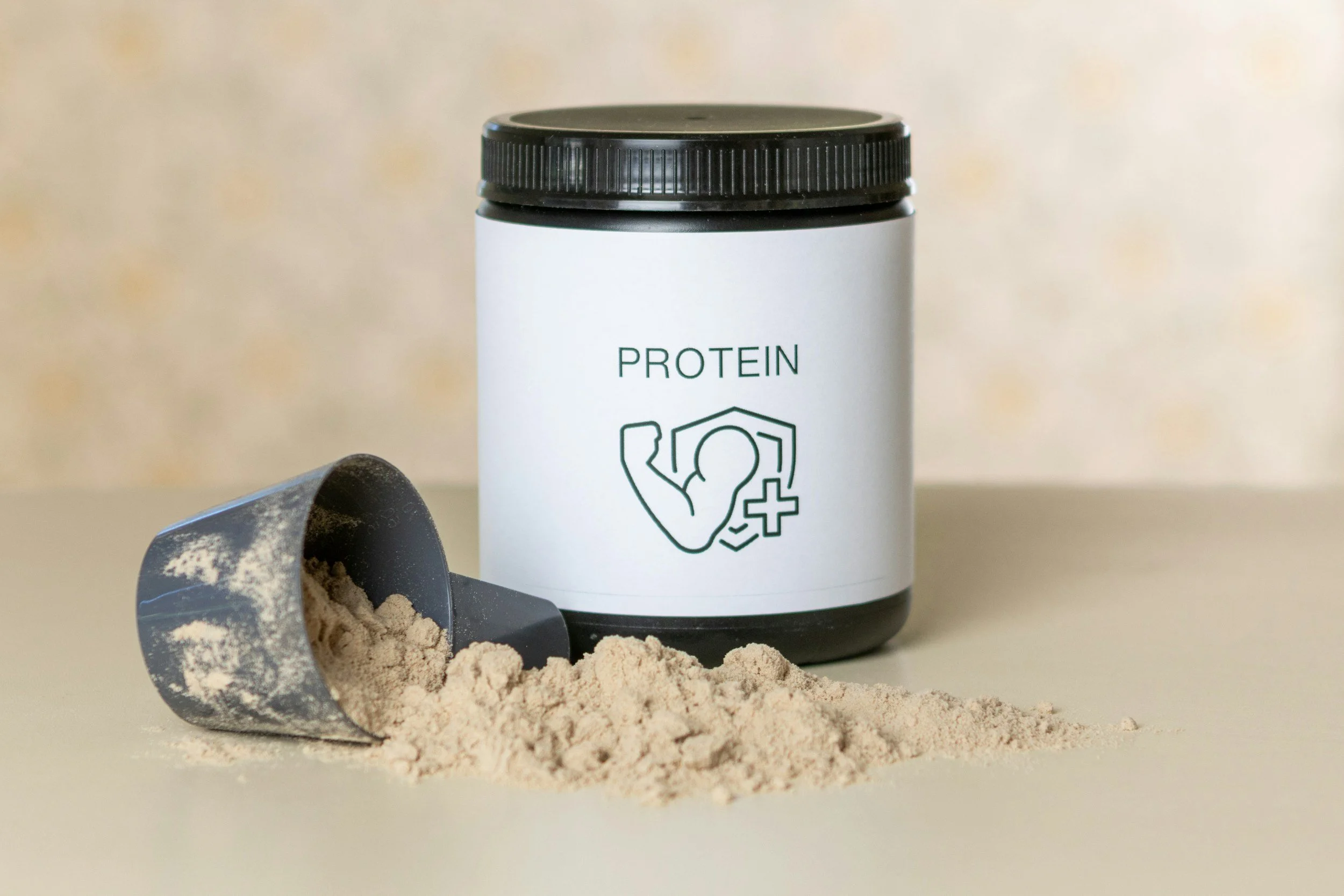
Protein is a macronutrient, which means that it contains calories (i.e. energy). It is made up of amino acids (compounds that contain carbon, hydrogen, oxygen, and nitrogen) that are bound together by peptide bonds. There are nine “essential” amino acids that we have to get in our diets, and our bodies can make the other “nonessential” amino acids from these.

ABOUT US: SPOKANE NUTRITIONISTS
We are a group of registered Spokane dietitians and personal trainers who have a passion for helping you feel in control of your health.
We work mainly with athletes, those with chronic GI conditions, and women in perimenopause and menopause. We create customized nutrition plans to empower and educate you in your health journey.
The Good
In our bodies, the long chains of peptides can fold into different shapes and serve a ton of crucial functions. Besides the obvious, maintaining and building muscle, proteins provide the framework for almost every tissue and cell in the body (e.g. connective tissue, blood cells, antibodies, enzymes), help with fluid and electrolyte balance, regulate acid-base balance, and more.
Our bodies can use protein for energy, but that is a last resort. That’s the job of our other two macronutrients, carbohydrates and fats. Compared to carbs and fats, protein is quite filling and can aid in weight loss and weight management.
Due to its many roles in the body, protein is crucial for recovery from exercise and, as we age, maintaining lean mass (muscle, bone, organs), keeping our immune system strong, and supporting cognitive health. This is one reason protein for muscle after 40 becomes such an important part of the conversation, particularly for women who want to stay strong and active as they age.
So far, protein is sounding like our rock star macro. Carnivore Diet here we come! Well, not so fast...
The Not-so-Good
Do you remember what I said that carbs and fats do? Carbs, in particular, are our bodies’ preferred energy source, particularly for higher-intensity activities. Fats are used more at rest and during low-intensity activities. Getting enough of these lets your body reserve protein for what it does best (see above).
“Carbs” come in many forms and are more than just bread, pasta, rice, and potatoes. Fruits, vegetables, whole grains, nuts, legumes, and seeds all contain fiber, which is a form of carbohydrate that has a bunch of benefits such as decreased risk of mortality from cardiovascular disease and decreased rates of many cancers and gastrointestinal disorders.
There is some research on people who consume high-protein diets and limit carbohydrates suggesting that they may have an unhealthy balance of gut microbes, which may then impact many of the health risks previously mentioned.
The takeaway? Protein for women is important, but protein isn't the only nutrient that matters.
A balanced diet MUST include carbohydrates, fats, fiber, fruits, vegetables, and a variety of whole foods.
Let’s Get Personal
Now, you may very well know someone who is loving the protein-maxxing life and frequently shares that they feel “uh-MAZE-ing!” I am happy for that person and am never going to argue with their lived experience.
That being said, there is good evidence that one cannot live healthfully on protein alone for all of the reasons mentioned above. Evidence-based nutrition relies on just that: evidence.
So, the following protein recommendations are based on the best evidence to date of what may be beneficial for most perimenopausal and post-menopausal women.
Estrogen helps to stimulate the growth of muscle fibers and progesterone helps regulate protein metabolism. As these hormones fluctuate and decline with age, women need to pay more attention to maintaining muscle and getting adequate protein.
This is where the conversation around protein perimenopause and protein menopause becomes especially relevant. Protein is not a magic fix for every symptom associated with hormonal changes, but getting enough can be an important piece of supporting muscle, strength, recovery, and overall health.
And when it comes to protein and strength training, the two really do go hand in hand. Resistance training provides the stimulus for your muscles, while adequate protein provides the amino acids your body needs to repair and build them.
Give Me the Numbers
You may have heard that adults need 0.8 g of protein per kg of body weight every day (I’ll abbreviate this g/kg). This is the minimum needed for most people to meet basic protein needs.
Active individuals, including athletes, older adults, growing teens, pregnant women, and some people with chronic diseases (this includes a lot of people!) need more.
It is recommended that athletes (male and female) consume anywhere from 1.2–2.2 g/kg per day (0.5–1.0 g/lb). For active women who are peri- and postmenopausal, this may be as high as 1.8–2.2 g/kg per day (0.8–1.0 g/lb).
For a 176 lb woman (80 kg), this is 145–160 grams of protein.
Yeah, that’s a lot and may not be realistic for everyone depending on your activity, overall calorie needs, and other health factors. That’s why it helps to talk to a dietitian to dial this in!
So, if you're wondering, “How much protein should a woman eat?”, there isn't one magic number that applies to every woman. Your needs depend on your body size, activity level, age, goals, and overall health.
To start, though, I recommend using 1.2 g/kg as a baseline and going from there.
It’s going to be hard to get that total amount during the day without eating at least a few meals and possibly snacks.
Aim for 30–40 g of protein per meal. Any snacks should be about 15 grams of protein.
If you are doing a strength-based training session, have a snack with 15 g of protein pre-workout. No matter what type of activity, aim to get 30 g of protein after moderate- to high-intensity exercise. This could (and probably should) be a meal.
For active women, especially those who are strength training, running, cycling, hiking, or participating in other endurance sports, spreading protein throughout the day can be a practical way to support recovery and help meet overall needs.
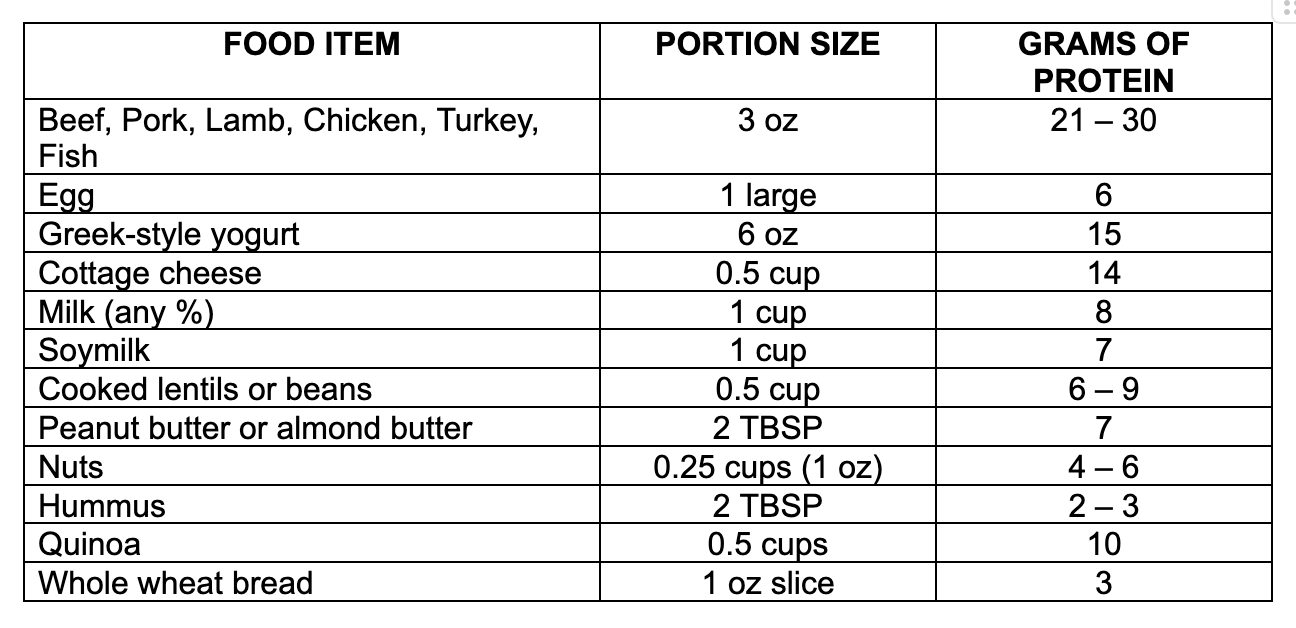
What does this amount of protein even look like? Glad you asked!
What Does This Look Like in Real Life?
You don't need to eat chicken breast at every meal or live on protein shakes to meet your needs. There are plenty of ways to build high protein meals for women that are satisfying, balanced, and actually enjoyable.
Think about pairing a protein-rich food with carbohydrates, healthy fats, and fruits or vegetables. For example:
Eggs with whole-grain toast and fruit
Greek yogurt with berries, nuts, and granola
Chicken, rice, roasted vegetables, and avocado
Lentil or bean bowls with quinoa, vegetables, and cheese
Salmon with potatoes and a big salad
Cottage cheese with fruit and nuts
The goal isn't to make every meal “high protein” at all costs. It's to consistently include enough protein throughout your day while still getting the other nutrients your body needs.
Need Help Figuring out Your Protein Needs?
Whether you're an endurance athlete, an active mom, navigating the changes of perimenopause, or simply trying to increase, your daily protein without it consuming your whole life— we can help!
At Fuel to Thrive, our dietitians and trainers provide personalized, evidence-based guidance to help you figure out what actually matters for you right now.
Akbari M, Vali M, Rezaei S, Bazmi S, Tabrizi R, Lankarani KB. Comparison of weight loss effects among overweight/obese adults: A network meta-analysis of mediterranean, low carbohydrate, and low-fat diets. Clin Nutr ESPEN. 2024 Dec;64:7-15. doi: 10.1016/j.clnesp.2024.08.023. Epub 2024 Sep 10. PMID: 39255914.
Jing T, Zhang S, Bai M, Chen Z, Gao S, Li S, Zhang J. Effect of Dietary Approaches on Glycemic Control in Patients with Type 2 Diabetes: A Systematic Review with Network Meta-Analysis of Randomized Trials. Nutrients. 2023 Jul 15;15(14):3156. doi: 10.3390/nu15143156. PMID: 37513574; PMCID: PMC10384204.
McCarthy D, Berg A. Weight Loss Strategies and the Risk of Skeletal Muscle Mass Loss. Nutrients. 2021 Jul 20;13(7):2473. doi: 10.3390/nu13072473. PMID: 34371981; PMCID: PMC8308821.
Nagao K. Cognition and nutrition: the role of dietary protein and amino acids in cognitive health. Curr Opin Clin Nutr Metab Care. 2024 Jan 1;27(1):40-46. doi: 10.1097/MCO.0000000000000987. Epub 2023 Oct 18. PMID: 37874047.
Ramezani F, Pourghazi F, Eslami M, Gholami M, Mohammadian Khonsari N, Ejtahed HS, Larijani B, Qorbani M. Dietary fiber intake and all-cause and cause-specific mortality: An updated systematic review and meta-analysis of prospective cohort studies. Clin Nutr. 2024 Jan;43(1):65-83. doi: 10.1016/j.clnu.2023.11.005. Epub 2023 Nov 14. PMID: 38011755.
Veronese N, Gianfredi V, Solmi M, Barbagallo M, Dominguez LJ, Mandalà C, Di Palermo C, Carruba L, Solimando L, Stubbs B, Castagna A, Maggi S, Zanetti M, Al-Daghri N, Sabico S, Nucci D, Gosling C, Fontana L. The impact of dietary fiber consumption on human health: An umbrella review of evidence from 17,155,277 individuals. Clin Nutr. 2025 Aug;51:325-333. doi: 10.1016/j.clnu.2025.06.021. Epub 2025 Jul 7. PMID: 40651334.
Chen Y, Yang K, Xu M, Zhang Y, Weng X, Luo J, Li Y, Mao YH. Dietary Patterns, Gut Microbiota and Sports Performance in Athletes: A Narrative Review. Nutrients. 2024 May 26;16(11):1634. doi: 10.3390/nu16111634. PMID: 38892567; PMCID: PMC11175060.
Hughes RL, Holscher HD. Fueling Gut Microbes: A Review of the Interaction between Diet, Exercise, and the Gut Microbiota in Athletes. Adv Nutr. 2021 Dec 1;12(6):2190-2215. doi: 10.1093/advances/nmab077. PMID: 34229348; PMCID: PMC8634498.
Sims ST, Kerksick CM, Smith-Ryan AE, Janse de Jonge XAK, Hirsch KR, Arent SM, Hewlings SJ, Kleiner SM, Bustillo E, Tartar JL, Starratt VG, Kreider RB, Greenwalt C, Rentería LI, Ormsbee MJ, VanDusseldorp TA, Campbell BI, Kalman DS, Antonio J. International society of sports nutrition position stand: nutritional concerns of the female athlete. J Int Soc Sports Nutr. 2023 Dec;20(1):2204066. doi: 10.1080/15502783.2023.2204066. PMID: 37221858; PMCID: PMC10210857.
“Protein Content of Common Foods.” (2019). John Hopkins School of Medicine, https://www.hopkinsmedicine.org/-/media/bariatrics/nutrition_protein_content_common_foods.pdf
“Protein.” (2018). USDA National Nutrient Database for Standard Reference Legacy (2018), https://www.nal.usda.gov/sites/default/files/page-files/Protein.pdf